
Centrifugal Casting – Precision, Strength & Performance in Every Spin
Centrifugal casting is a specialized manufacturing process used to produce high-integrity cylindrical parts by pouring molten metal into a rapidly spinning mold
Centrifugal casting isn’t just another foundry process—it’s a high-precision, performance-driven technique trusted across industries where reliability under pressure matters. From marine propeller sleeves to turbine rings and heavy-duty bushings, this method consistently delivers dense, defect-free cylindrical components that perform under stress, wear, and extreme temperatures.
What is Centrifugal Casting?
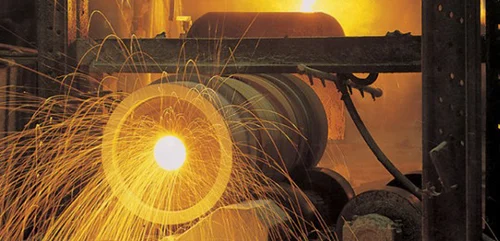
Centrifugal casting is a specialized manufacturing process used to produce high-integrity cylindrical parts by pouring molten metal into a rapidly spinning mold. As the mold rotates at high speed, centrifugal force pushes the molten metal outward against the mold wall. This process naturally removes impurities and gas pockets toward the inner diameter, leaving behind a dense, fine-grained outer structure that’s exceptionally strong and uniform.
The result is a component with outstanding mechanical properties, superior wear resistance, and minimal internal defects — ideal for demanding applications in industries like marine, power generation, oil & gas, mining, and heavy machinery. Centrifugal casting is commonly used for creating parts such as bushings, sleeves, rings, gear blanks, and pipe sections. It supports a wide range of metals, including bronze, stainless steel, cast iron, and other high-performance alloys.
What sets centrifugal casting apart is its ability to produce near-net-shape parts with excellent metallurgical quality, reduced material waste, and extended lifespan — making it a cost-effective and dependable choice for critical components.
Why Manufacturers Choose Centrifugal Casting?
If you’re in power generation, oil & gas, mining, railways, or marine, you already know: performance isn’t optional. Centrifugal casting delivers consistent quality where it counts.
- High Purity: The process naturally removes oxides, inclusions, and voids, creating a refined grain structure.
- Near-Net Shape: Save on material costs and machining time—parts come out closer to final dimensions.
- High Mechanical Strength: Due to the directional solidification, parts show enhanced tensile strength and fatigue resistance.
- Flexibility in Alloys: Cast a wide range of materials—carbon steels, stainless, aluminum bronzes, copper alloys, and even high-nickel superalloys.
- Minimal Defects: Unlike static casting, porosity and shrinkage issues are dramatically reduced.
Typical Components Made Using Centrifugal Casting
Centrifugal casting isn’t a one-size-fits-all process—it’s used to craft parts where metallurgy and precision directly impact safety and performance.
- Cylinder liners and sleeves
- Pump and valve bodies
- Gear blanks and rings
- Bushings and bearing shells
- Pipe sections and pressure rings
- Industrial rollers
These components are used in sectors such as:
- Power Generation: Steam turbine parts, boiler tubes
- Oil & Gas: Pressure seals, flow control equipment
- Mining: Abrasion-resistant liners, bushings
- Marine: Propeller hubs, water-cooled liners
- Rail and Transport: Brake system parts, traction motor sleeves
Centrifugal vs. Other Casting Methods
Unlike sand or investment casting, centrifugal casting doesn’t rely on gravity to fill molds. Instead, high rotational forces ensure dense filling and uniform wall thickness. This makes it ideal for high-performance, cylindrical parts that demand dimensional stability and strength across their cross-section.
| Feature | Centrifugal Casting | Sand Casting | Investment Casting |
|---|---|---|---|
| Internal Soundness | Excellent | Moderate | Good |
| Wall Thickness Uniformity | High | Low | Moderate |
| Surface Finish | Good | Poor | Excellent |
| Ideal for Cylindrical Parts | Yes | No | No |
| Defect Control | High | Low | Moderate |
Process Overview (In Simple Terms)
Mold Setup – The mold (horizontal or vertical) is preheated and coated with a release agent.
Rotation Starts – The mold begins spinning at high speeds.
Metal Pouring – Molten metal is introduced and flung to the mold walls by centrifugal force.
Cooling & Solidification – Metal cools from the outer wall inward, forming a strong, clean structure.
Machining – Once cooled, the part is removed and machined as needed, especially the bore where impurities collect.
Key Considerations for Buyers and Engineers
- Dimensions: Know your required OD, ID, and length—centrifugal casting is optimal for tubular or ring-shaped parts.
- Material Selection: Choose alloys based on your wear, corrosion, or heat-resistance needs.
- Machining Allowance: Plan for post-casting machining, especially on the bore and faces.
- Volume: Ideal for both low- and medium-volume production—cost-effective and repeatable.
Why Centrifugal Casting Still Matters
In today’s push for lightweighting, reliability, and cost-efficiency, centrifugal casting offers a rare combination of performance and value. Whether you’re replacing forged rings or designing new components, it’s worth evaluating for any cylindrical or rotationally symmetrical part—especially where quality can’t be compromised.
Centrifugally Cast Manganese Bronzes
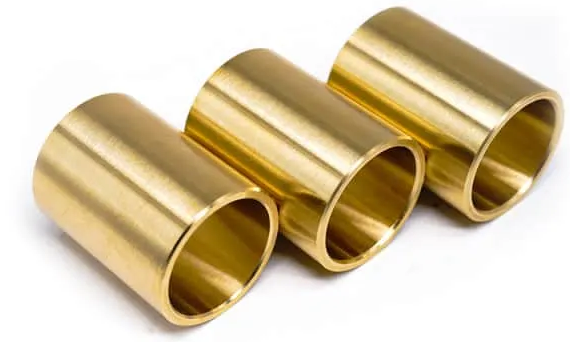
Centrifugally cast manganese bronzes are known for their excellent strength, toughness, and wear resistance, making them ideal for high-load, high-stress applications. These alloys, rich in copper with added manganese, iron, and aluminum, are particularly valued for their ability to perform well under heavy loads and in corrosive environments — especially in marine and industrial settings.
The bronze is spun during solidification, which helps eliminate impurities and create a dense, uniform structure with minimal porosity. The result? A highly reliable component with extended service life — perfect for bushings, bearings, gears, propeller shafts, and other critical parts. Manganese bronzes offer a smart balance between strength and corrosion resistance, and centrifugal casting enhances that performance by delivering consistent quality from the inside out.
Centrifugally Cast – Manganese Bronzes (C86200, C86300, C86400, C86500, C86700)
Manganese bronze, the strongest of the “as cast” bronze, is used primarily for heavy duty mechanical products. They provide moderately good corrosion resistance.
Centrifugally Cast – Leaded Manganese Bronze
Centrifugally cast leaded manganese bronze combines the strength and toughness of manganese bronze with the added lubricity of lead, making it an ideal material for heavy-duty bearings, bushings, and wear plates. The lead improves machinability and reduces friction, while the centrifugal casting process ensures a dense, defect-free structure with excellent durability.
This alloy performs well under high loads and moderate speeds, especially in applications where lubrication may be intermittent. It’s a trusted choice in industries like construction, mining, and marine, where reliability and resistance to wear are essential.
Centrifugally Cast – Leaded Manganese Bronze C86400, C86700
Centrifugally Cast – High Leaded Tin Bronzes
Centrifugally cast high leaded tin bronzes are the go-to choice when you need excellent wear resistance, outstanding machinability, and superior load-carrying capacity — especially in lubricated service. These alloys contain a high percentage of lead, which acts as a solid lubricant, reducing friction and making them ideal for applications like bushings, bearings, and thrust washers.
The centrifugal casting process enhances these properties even further by producing a clean, dense structure with minimal porosity and consistent grain flow. This means better performance, longer life, and fewer failures in demanding environments like heavy equipment, industrial machinery, and hydraulic systems. With the perfect combination of strength, ductility, and built-in lubricity, high leaded tin bronzes deliver smooth, dependable performance where it counts.
Centrifugally Cast – High Leaded Tin Bronzes (C932, C934, C935, C936, C937, C938, C943, C945)
The high leaded tin bronzes contain the most widely used bearing bronze alloy C932 (also known as SAE 660). Widely available and somewhat less expensive than other bearings alloys – it is known for its unsurpassed wear performance against steel journals. It can be used against unhardened and not perfectly smooth shafts. Lead weakens these alloys but imparts the ability to tolerate interrupted lubrication. It also combines favorable antifriction properties with good load-carrying capacities and will conform to slight shaft misalignments.
Centrifugally Cast – Leaded Tin Bronzes
Centrifugally cast leaded tin bronzes are a trusted solution for components that demand strength, reliability, and smooth performance. These alloys blend tin for durability and corrosion resistance with lead for improved machinability and built-in lubricity — making them perfect for bushings, bearings, and other parts that operate under moderate loads and speeds.
The centrifugal casting process ensures a dense, uniform structure by spinning the molten metal at high speed during solidification. This removes impurities and creates a fine-grained casting with minimal porosity, resulting in longer service life and consistent performance in real-world conditions. Whether used in automotive, industrial, or marine settings, leaded tin bronzes are valued for their balance of strength, wear resistance, and easy machinability — all enhanced by the quality and reliability of centrifugal casting.
Centrifugally Cast – Leaded Tin Bronzes (C922, C923, C926, C927)
Leaded tin bronze has similar uses as tin bronze but is specified when better machinability and/or pressure tightness is needed.
Centrifugally Cast – Tin Bronzes (C903, C905, C907, C916)
Tin bronze offers excellent corrosion resistance along with good wear resistance and reasonably high strength. Used in sleeve bearings, they wear especially well against steel. Tin bronze alloys include C90300, C90500, C90700, C90800, C90810, C91000, C91100, C91300, C91600, and C91700.
Centrifugally Cast – Aluminum Bronzes
Centrifugally cast aluminum bronzes are known for their exceptional strength, corrosion resistance, and durability — especially in tough environments like marine, aerospace, and heavy industrial applications. These copper-based alloys, with aluminum as the primary alloying element, offer impressive resistance to wear, high temperatures, and even chemical attack.
In centrifugal casting process, the metal is spun during solidification, forcing impurities to the inner surface and leaving behind a dense, high-integrity structure. This results in castings with superior mechanical properties, minimal porosity, and longer service life.
Aluminum bronzes are often used for pump and valve components, bushings, gear parts, and propeller shafts — anywhere strength and corrosion resistance are critical. With the added benefits of centrifugal casting, these components are even more reliable and performance-ready in the real world.
Centrifugally Cast – Aluminum Bronzes (C952, C953, C954, C955, C956, C958, C95900, C63000 ) and aerospace standards AMS 4880, AMS 4881, AMS 4640
Aluminum bronzes and nickel aluminum bronzes contain between 3% and 12% aluminum which strengthens the alloy. They are best known for BThe high leaded tin bronzes contain the most widely used bearing bronze alloy C932 (also known as SAE 660). Widely available and somewhat less expensive than other bearings alloys – it is known for its unsurpassed wear performance against steel journals. It can be used against unhardened and not perfectly smooth shafts. Lead weakens these alloys but imparts the ability to tolerate interrupted lubrication. It also combines favorable antifriction properties with good load-carrying capacities and will conform to slight shaft misalignments.
Centrifugally Cast – Copper Bronze
Centrifugally cast copper bronze is a reliable choice when you need solid performance, excellent thermal and electrical conductivity, and good corrosion resistance. Made primarily of copper with controlled additions of tin or other elements, this alloy offers a great balance of strength and workability — making it suitable for a wide range of industrial components like bushings, sleeves, connectors, and fittings.
The centrifugal casting process adds a major advantage: by spinning the molten metal in a rotating mold, it creates a dense, refined structure with minimal porosity and internal flaws. This ensures greater durability, longer wear life, and more consistent quality throughout the part.
Whether used in electrical applications, marine fittings, or general industrial equipment, centrifugally cast copper bronze delivers dependable, clean performance — built to handle both mechanical and environmental challenges.
Centrifugally Cast – Copper Bronze
(C89320, C89325, C89831, C89833, C89835, C89836, C89837)
Examples of items that may need replaced by a lead-free grade if in a potable water installation
RED BRASS C83300, C83600, 83800
SEMI REDRASS C84400, C84800
YELLOW BRASS C85200, C85400, 85700